
Hey PAPAFAM 👋🏼
Choosing a coding model is becoming a job of its own. One for the quick fix, another for the difficult bug, then a third to check the answer. Useful flexibility. Also another decision between you and shipping.
This week, GitHub is moving that decision into Copilot. The interesting question is not whether you can stop caring about models. It is whether you can spend less time choosing them and more time checking the finished work.
There is also a simpler route into continuous integration, smaller Claude API requests, and repository automation written in Markdown. First, the change I would put on your testing list.
🔥 The Big One
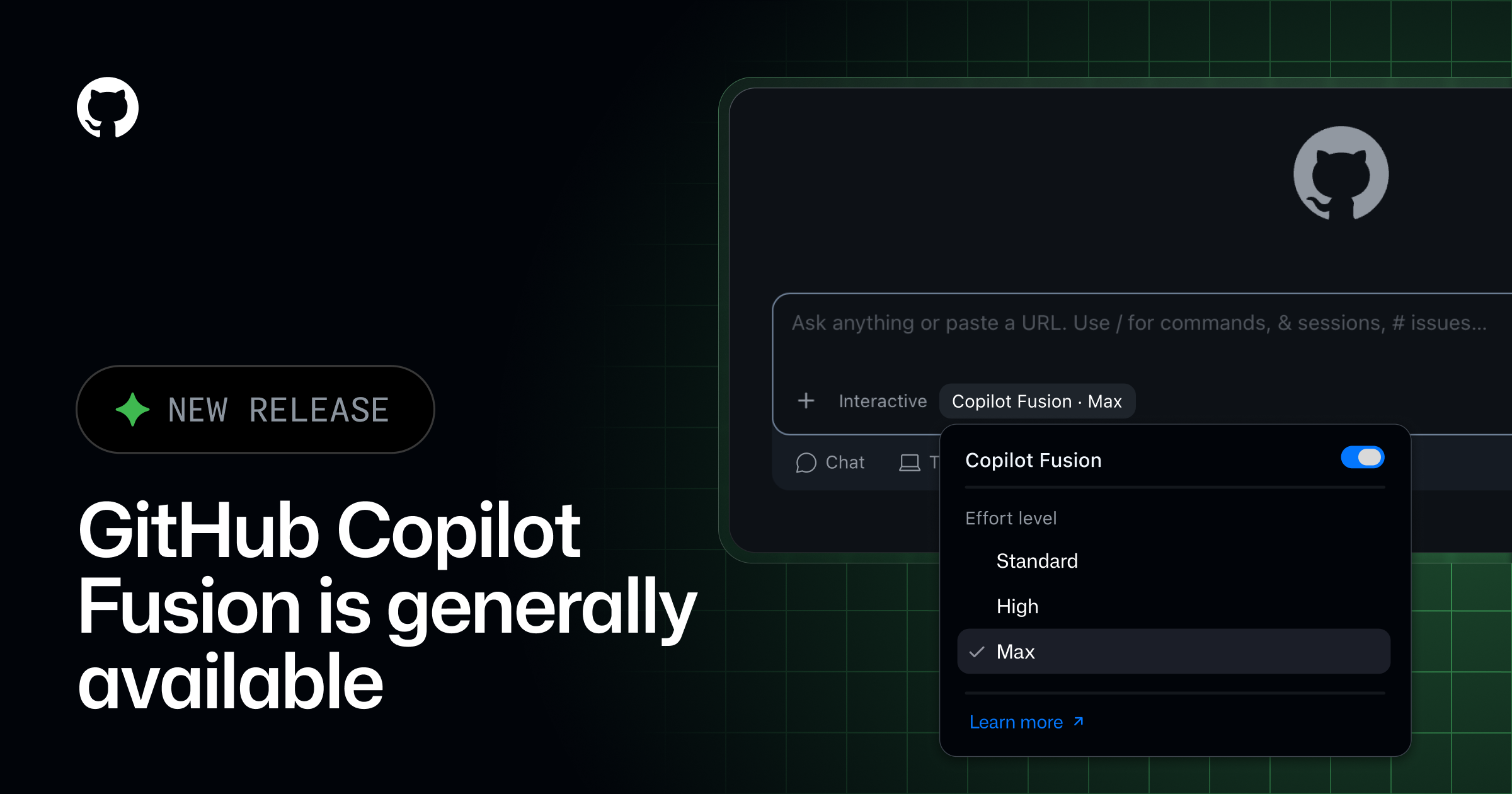
GitHub Copilot now picks the models for you
GitHub made Copilot Fusion generally available on 28 October. Instead of selecting a particular model, you choose Fusion and an effort level: Standard, High or Max. Copilot then decides which models to use and how they work together.
Sometimes one model handles the job. Sometimes an efficient model drafts an answer and a quality check decides whether to bring in a stronger one. Another route has one model draft, another critique, and the original revise.
That last distinction matters. This is not just a new name in the model picker. It can change the process used to solve your task.
“GitHub Copilot Fusion is generally available.” (GitHub)
⚡ What shipped this week
1. Vercel CI no longer needs a Vercel project

Vercel launched its continuous integration service in beta on 28 October across all plans. It uses your task graph and cache to avoid repeating work unnecessarily. Continuous integration is the automated checking that happens when you push code, not another name for deployment.
The useful 3 November update: you can enable it for a repository without first creating an empty Vercel project. You still need the GitHub App connected and write or admin permission on the repository.
“Private GitHub repositories only. Public repositories and other Git providers are not yet supported.” (Vercel)
Read the launch · See the setup update →
2. Claude API threads stop you resending the whole conversation

Anthropic's 2 November release notes introduce message threads in beta for the Messages API. For a long agent loop, later requests can send just the new messages instead of the full conversation again.
“The API keeps the conversation on the server, so each later request sends only the new messages.” (Anthropic)
The benefit is smaller requests and lower time to first token. This is temporary server-side conversation state, not permanent agent memory: a thread expires five minutes after its last request and is deleted no more than an hour after last use.
For builders, the useful test is a multi-step tool workflow. Check responsiveness and what happens when a user pauses long enough for the thread to expire. Do not mistake this for a token-price cut.
3. GitHub Agentic Workflows turns Markdown into automation
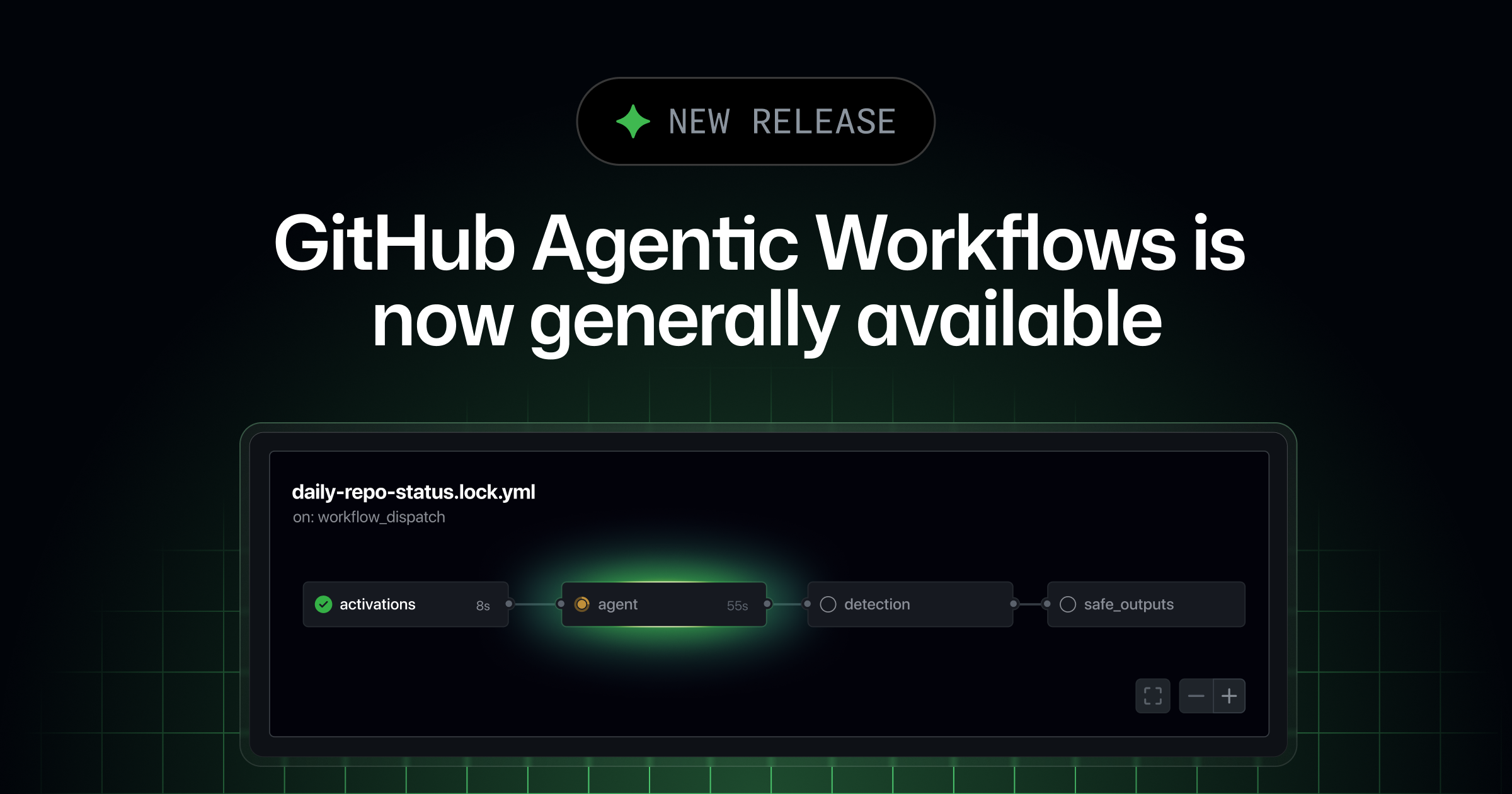
GitHub made Agentic Workflows generally available on 28 October. You describe a repository job in Markdown, then compile it into a workflow that GitHub Actions can run.
“Define your automation in natural language Markdown files, and GitHub Agentic Workflows compiles them into standard Actions YAML.” (GitHub)
It is available on GitHub.com Free, Team and Enterprise plans. The default Copilot CLI engine requires a Copilot licence; you can also bring your own coding agent. Availability on a free repository plan does not make the model work free.
Start with a read-only job: investigate an issue and report the evidence. The default read-only permissions and sandbox are useful boundaries, not a promise that every automation is safe. Earn write access with a narrow, repeatable task before widening the brief.
4. Cursor users: check these Claude Code extension versions

An important exception to the launch roundup. Cursor's 29 October notice, updated on 30 October, identifies malicious Windows and macOS versions 2.1.312 and 2.1.313 of Anthropic.claude-code distributed through its extension marketplace.
“These malicious versions of the extension were not developed by Anthropic.” (Cursor)
Cursor says the packages attempted to install persistent SSH access. It removed them and took the attacker server offline, but that does not clean affected machines. The notice warns that uninstalling the extension may not remove its persistence scripts.
If those versions reached your machine, follow Cursor's official remediation guidance. Do not read this as a claim that Anthropic's official distribution was compromised, or that every affected host had successful remote access.
Read the notice and remediation steps →
🧰 Worth your time
-
Google's A2UI and CopilotKit tutorial: A fresh guide to letting an agent compose trusted UI components. A practical build tutorial, not a new launch of A2UI.
-
Dedica: Check whether your site works for software agents, not just people. A free score is a starting point, not proof that an agent can complete your signup flow. Discovered in this week's notes.
-
telemetry.dev: Follow model calls, tool steps and retrievals in one trace. Useful for finding where a run failed. Remove sensitive data before export; disabling capture does not prevent transmission to ingest. Another discovery from this week's notes.
This week's challenge: take one real coding task and write down its finish line before starting. Compare your normal setup with automated model selection. Track review effort as well as whether the code runs.
Would you let your coding tool choose the models, or is that a decision you want to keep? Hit reply and tell me why.
I read every single one.
Talk soon PAPAFAM,
Sonny 👋🏼
👇🏽 Don't forget to follow me across socials!




Responses