
A stronger AI model is useful. A stronger model you can afford to run throughout the day can change how you work.
OpenAI just released GPT-6 Sol and Luna, bringing more of Astra's capabilities into lower-cost models for coding, agent workflows and everyday work. The question is no longer just which model is best. It is which parts of your workflow actually need the most expensive one.
🔥 The Big One

OpenAI just launched GPT-6 Sol and Luna
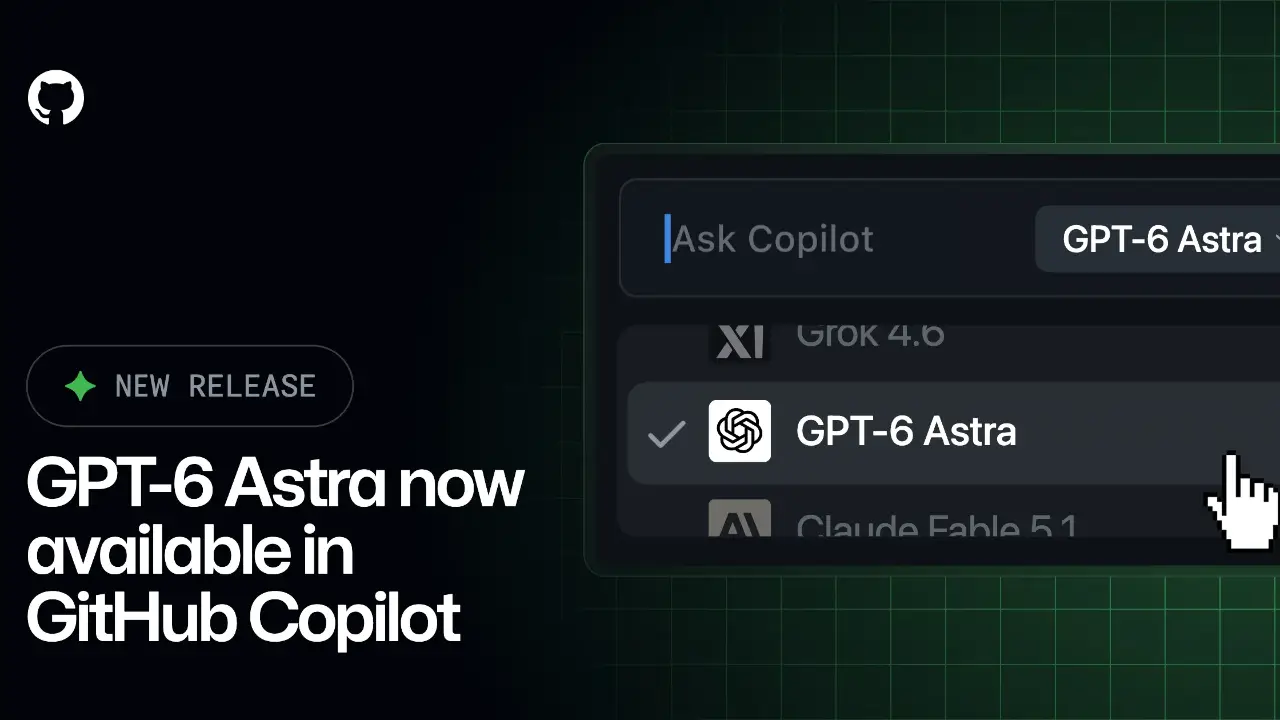
OpenAI introduced GPT-6 Sol and GPT-6 Luna on 22 September. They expand the GPT-6 family below Astra, with a focus on making capable coding and agent workflows more affordable.
Sol is positioned for complex coding and agentic work. Luna is the lower-cost option for focused, high-volume tasks. Both support tools through the Responses API, including web search, computer use and MCP connections.
The standard API prices per million tokens are:
-
GPT-6 Sol: $2 input and $10 output, down from GPT-5.6 Sol's promotional $4 and $20.
-
GPT-6 Luna: $0.10 input and $0.50 output, down from GPT-5.6 Luna's promotional $0.20 and $1.20.
Those are token prices, not a promise that every completed job costs half as much. Reasoning effort, retries and tool use still affect the bill. Requests above 272,000 input tokens also use higher rates across the full request.
“These models are not yet available in Chat.” (OpenAI)
Read OpenAI's announcement → · Sol model docs → · Luna model docs →
⚡ What shipped this week
1. Grok 4.7 brings a new brain to Grok Bot
SpaceXAI released Grok 4.7 on 21 September. The important connection to Grok Bot is in how the model was trained, not a relaunch of the app. The model is also available in Cursor, Grok Build and the Grok API, with access offered through third-party coding tools and platforms.
What changed underneath? SpaceXAI says 4.7 uses a larger base model and a longer reinforcement-learning run, weighted toward problems that take many hours to complete. It reports better self-verification and handling of longer context.
Here is the Grok Bot-specific detail from the announcement:
“We also trained Grok 4.7 to natively understand the Grok Bot harness, making it better at conversational tasks and general knowledge work.” (SpaceXAI)
Read the Grok 4.7 release → · Try Grok Build →
2. Claude Opus 5.5 cuts API prices compared with Opus 5
Anthropic introduced Opus 5.5 on 22 September. Standard API prices are $4 input and $20 output per million tokens, versus Opus 5's $5 and $25. Cache reads cost $0.20 per million.
That is a 20% input/output price reduction. Separately, Anthropic says:
“Our tests show that at default settings it will cost 40% less than Opus 5 on typical workloads.” (Anthropic)
The second figure is a vendor test result, not a guaranteed saving on your application. Anthropic also increased five-hour usage limits on Pro, Max and Team; that does not establish that last week's weekly-allowance change was reversed.
For persistent agents, cheaper work matters. Compare accepted results, retries and total spend before switching. A cheaper answer you need to repair is not a cheaper job.
Read Anthropic's announcement →
3. Cloudflare gives each agent branch somewhere to prove itself

A tidy diff is not a working feature. Cloudflare's new Worker Previews put each branch behind a stable URL, with its own configuration, observability and state.
“Each Git branch gets a production-like place to run, with its own code, configuration, URL, observability, and state.” (Cloudflare)
Run npx wrangler preview, exercise the changed behaviour and inspect the logs before merging. That gives the agent something more useful than its own confidence: a running result it can check.
One important boundary: a service binding from a Preview still calls the bound Worker's production deployment. Review those connections before treating a preview as a completely isolated copy of your application.
4. Vercel Sandbox can keep the workspace after the run ends

Vercel's new Drives are persistent directories you can mount across Sandbox runs. They are in public beta on Hobby, Pro and Enterprise.
That means dependencies, datasets or an agent's saved working files do not have to disappear with the sandbox. The useful architecture detail is how sharing works:
“A Drive supports one read-write mount at a time.” (Vercel)
Other sandboxes can read point-in-time snapshots concurrently. They do not see later writes automatically.
I would use that distinction deliberately: let one worker prepare the workspace, then give review and test workers the same snapshot. Persistent storage preserves files; it does not automatically make every worker's view current.
5. Google and Speakeasy open the machinery behind SDKs
On 17 September, Google announced its partnership with Speakeasy to open-source the OpenAPI client generation suite: SDK generators, a CLI generator and a documentation MCP server generator.
“Speakeasy is open sourcing its full OpenAPI client suite under the AGPLv3 license.” (Google)
The practical win is giving agents current API schemas rather than asking them to remember method names. MCP is the standard connection between an agent and external tools or context; here, the generated server exposes documentation and schemas.
The generator's licence is AGPLv3. Google explicitly distinguishes that from generated SDKs, which can keep your chosen licence. If you maintain an API, this is worth examining before hand-maintaining several clients.
🧰 Worth your time
-
Jev by TypeSafe: A discovery from this week's launch notes for typed decisions and confidence-aware workflows rather than another chat response. Type safety is not factual infallibility; test ambiguous inputs and define when to escalate.
-
Clueso MCP: Let an agent create and revise an editable video project. Useful for product walkthroughs that need updating after a release. Check current plan access and export limits before building a publishing workflow around it.
-
Python Workers are generally available: Cloudflare now supports Python frameworks including FastAPI, Django and Flask. Check package compatibility first: native extensions still need WebAssembly support, not just a successful install on your laptop.
This week's challenge: pick one workflow and test whether Sol or Luna can handle a step you currently give to a more expensive model. Keep the acceptance criteria unchanged and count the retries, not just the tokens.
What would you run more often if capable AI cost less? Hit reply and tell me the actual job you would try with Sol or Luna.
I read every single one.
Talk soon PAPAFAM,
Sonny 👋🏼
👇🏽 Don't forget to follow me across socials!

Responses