
I think this is the week the AI coding conversation quietly changed.
Not because one model got slightly smarter, but because the tools around agents started looking more like real operating systems for builders.
🔥 The Big One

Manus Cloud Computer shows where agentic software is heading.
Manus launched Cloud Computer this week — a dedicated cloud machine where agents, bots, scripts, databases, and scheduled jobs can keep running even after your laptop closes.
That sounds simple, but it is a big deal.
Most AI tools today still behave like temporary chats. You ask for something, they spin up a short-lived task, then the environment disappears. But real businesses do not run on temporary tasks. They run on persistent systems: bots that stay online, jobs that run every morning, databases that keep state, automations that keep working while you sleep.
That is why this launch matters. Manus is not just saying “ask AI to build something.” It is saying: give the AI a machine where the work can actually live.
On Product Hunt, Cloud Computer hit 227 votes and positioned itself around a very practical promise: bots, Python scripts, apps, databases, and scheduled jobs running 24/7 without forcing non-technical users into server setup.
For builders, this is the unlock: the next wave of AI products will not just generate code. They will operate software.
⚡ What shipped this week
1. Zed 1.0 — the editor wars are now agent wars
Zed officially hit 1.0, and the timing is interesting. Every week there seems to be another VS Code fork with AI bolted on, but Zed is taking a different route: Rust-native performance, multiplayer collaboration, and AI built into the editor’s foundation.
The important detail is that Zed now supports running multiple agents in parallel and uses the Agent Client Protocol to open the editor to Claude Agent, Codex, OpenCode, Cursor, and others.
That is the real story. The editor is becoming the control room for agents.
2. Mintlify Editor — docs are becoming agent infrastructure
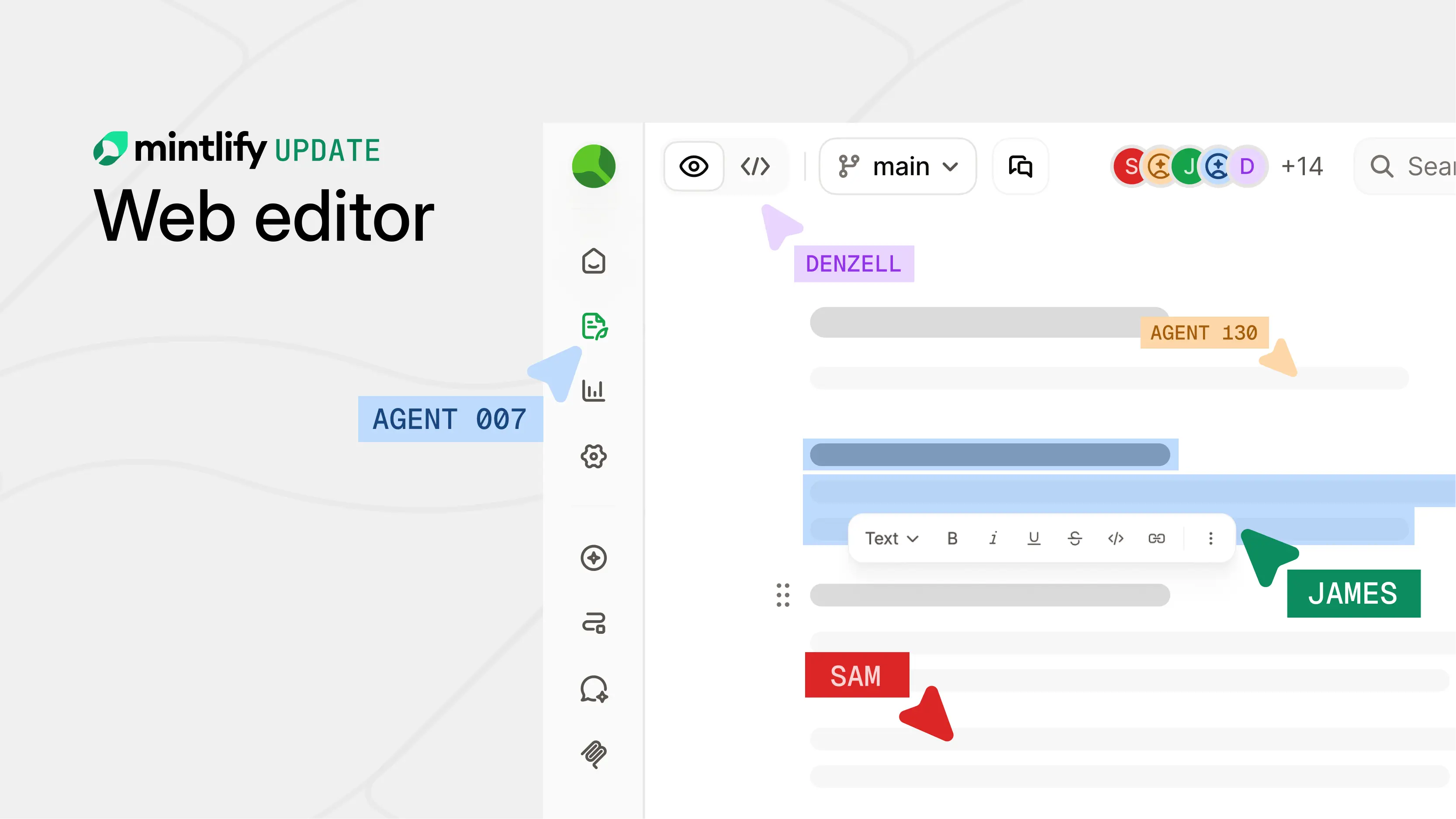
Mintlify launched a new collaborative editor that combines WYSIWYG editing, live collaboration, bidirectional git sync, and AI-native support.
This matters because documentation is no longer just for humans. Agents need clean, current, structured knowledge too. If your docs are scattered across Slack, Notion, GitHub, and old markdown files, your AI workflows inherit that mess.
Mintlify’s angle is smart: keep docs git-native for developers, but make them editable for the rest of the company. Product, support, marketing, and agents can all work around the same source of truth.
On Product Hunt, Mintlify Editor pulled 303 votes and 21 comments, which is strong signal for a docs product.
3. Netlify Database — production-ready vibes are the next bottleneck
Netlify launched Netlify Database, a managed Postgres database built directly into the platform.
This is exactly the kind of boring-but-powerful infrastructure that matters in the AI builder era. Vibe coding made it easier to generate apps. But the moment you need auth, data, migrations, staging, deploy previews, and branches, the dream can fall apart fast.
Netlify is attacking that gap: make databases feel as safe and branchable as code. Product Hunt comments kept circling the same pain point — shared staging databases breaking teams — which tells you this is not a theoretical problem.
The launch hit 228 votes and 25 comments, with database branching being the standout feature.
4. Gemini Deep Research Agent — MCP keeps moving from buzzword to backbone
Google’s Gemini Deep Research Agent is now positioned around web and MCP research workflows inside the Gemini API.
The useful part here is not just “AI can research.” We already know that. The useful part is that research agents are becoming programmable. They can gather context, use external data through MCP, synthesize long-running reports, and fit into larger products.
That matters for anyone building AI SaaS. Research is not a feature you manually open in a browser anymore. It is becoming an API primitive.
On Product Hunt, this launch was smaller than the others with 186 votes, but it points at a bigger shift: MCP is becoming the connective tissue for agent workflows.
5. Lovable mobile app — vibe coding wants to leave the desk

Lovable launched its mobile app on Product Hunt with the tagline: “Your ideas don’t wait for you to sit down at a desk.”
That line says a lot about where AI app builders are going. The category started as desktop-first prompt-to-app tools. Now the next battleground is capture speed: can you turn an idea into a prototype from your phone before the spark disappears?
The comments were mixed, which is actually useful. Some users loved the flexibility, others questioned whether mobile is better than the web app. That is the right debate. Mobile AI builders are exciting, but the experience has to be dramatically faster — not just a smaller version of the web product.
Lovable still pulled 205 votes, which shows the demand is there.
🧰 Worth your time
-
Model Context Protocol docs — If agents are becoming real workers, MCP is one of the cleanest ways to understand how they connect to tools, files, APIs, and data sources.
-
Vercel AI SDK streaming guide — Useful if you are building agent/product experiences where waiting for the full response kills the UX. Streaming is becoming table stakes.
-
Mintlify’s new editor — Docs are becoming an agent dependency. If your knowledge base is messy, your AI workflows will be messy too.
My weekly message to you
This week, I want you to stop thinking about AI as a chat box.
Think of it as a worker that needs an environment.
A good agent needs context. It needs tools. It needs memory. It needs a place where files, tasks, credentials, and workflows can persist safely.
That is the shift.
The builders who win will not just prompt better. They will design better systems around the prompt.
So here is the challenge: pick one workflow you repeat every week and turn it into a persistent system.
Not a perfect system. Not a giant rebuild. Just one tiny workflow that runs without you starting from zero every time.
Reply and tell me what workflow you would automate first.
I read every single one.
Talk soon PAPAFAM,
Sonny 👋🏼
👇🏽 Don't forget to follow me across socials!



Responses