
This week felt like a shift. Not a “better benchmark” kind of shift — a these tools are getting more dependable inside real workflows kind of shift.
Anthropic led that story this week.
🔥 The Big One
Claude Opus 4.7 is a real step toward more usable AI agents
Anthropic just made Claude Opus 4.7 generally available, and the interesting part isn’t just “the model got better.” It’s what got better.
This update is being framed around the stuff builders actually care about: stronger performance on advanced software engineering, better handling of hard long-running tasks, more reliable instruction-following, and better habits around checking its own work before replying.
That matters.
Because once you’re using AI seriously, you stop caring about flashy demos pretty quickly. What you really care about is whether the model can stay on track across a messy workflow without drifting, hallucinating, or quietly breaking something halfway through.
Opus 4.7 also got better vision, including support for higher-resolution images, plus improved output quality for things like interfaces, slides, and docs. Anthropic kept pricing the same as Opus 4.6 too, which makes the upgrade easier to justify for teams already building with it.
The bigger story: this feels like Anthropic pushing hard toward reliable agent work, not just prettier chat output.
⚡ What shipped this week
1. Claude Design
Anthropic also launched Claude Design, which is a strong signal that these models are expanding beyond chat and coding into design, prototypes, one-pagers, decks, and product thinking.
That’s interesting because real product work is never just code. It’s ideas, interfaces, feedback loops, tradeoffs, revisions, and handoff. The more one system can stay useful across those layers, the more valuable it becomes.
2. OpenAI expands Codex into a broader workflow tool
OpenAI’s latest Codex push is less about “new code model” and more about workflow control — browser work, memory, plugins, automation, and broader task execution. The pattern is obvious now: coding tools are trying to become full work agents.
3. OpenAI evolves the Agents SDK
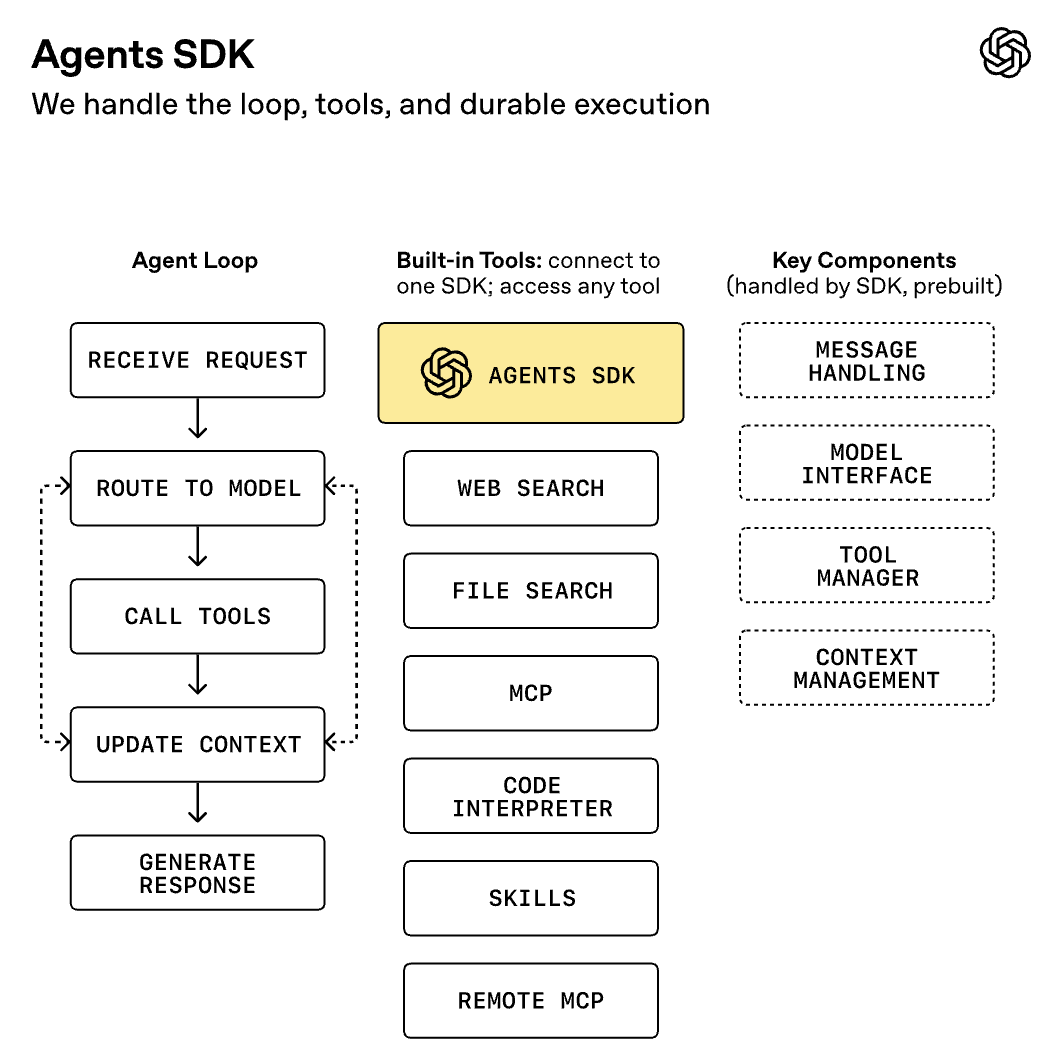
This one matters for serious builders. Better agent tooling means better orchestration, memory, tool use, and state handling. It’s not the flashiest story of the week, but it’s one of the most important. Infrastructure is becoming the battleground.
4. Google AI Studio leans into full-stack vibe coding
Google is clearly trying to turn AI Studio into more than a playground. With deeper app-building support, it’s moving closer to a real environment for turning prompts into working products.
The question now isn’t whether people will build this way. It’s whether the outputs become stable enough to keep.
5. Gemma 4 keeps the open model angle alive
While frontier labs race on integrated surfaces, Gemma 4 is a reminder that open and lighter-weight models still matter. Cost, latency, privacy, and local control are still very real considerations for teams building real systems.
🧠 The angle to keep in mind
The market is shifting from smart outputs to trusted execution.
That’s the real upgrade.
A year ago, the main question was whether the model could generate something impressive. Now the real question is whether it can hold up inside a workflow you’d actually depend on — coding, reviewing, designing, researching, and coordinating across tools without falling apart.
That’s why this week matters.
Not because one company shipped one shiny feature.
Because the products are starting to feel a little less “demo-y” and a little more usable in real work.
My weekly message to YOU!
If you’re building with AI right now, this is probably the best time to stop thinking in prompts and start thinking in workflows.
Pick one task you do repeatedly. Then ask yourself:
Can an agent handle 30% of this reliably now?
That’s where the leverage is.
Hit reply and let me know what your current setup looks like — Claude, Codex, Cursor, Copilot, something custom?
I read every single one.
Talk soon PAPAFAM,
Sonny 👋🏼
👇🏽 Don’t forget to follow me across socials!



Responses