
For years, running a serious AI model locally meant accepting a compromise.
You got privacy and control, but nowhere near the memory or speed of the cloud.
Apple just pushed that trade-off much further with M5 Ultra: its most powerful chip ever, inside a Mac Studio that can hold up to 512GB of unified memory and cluster with other machines for distributed AI inference.
That makes local AI infrastructure—not another cloud model—the biggest builder story this week.
🔥 The Big One
Apple's new M5 Ultra makes local AI genuinely serious

Apple unveiled M5 Ultra and a new Mac Studio on 25 August. The top configuration combines an up-to-36-core CPU, up-to-80-core GPU and up to 512GB of unified memory with 1.2TB/s of memory bandwidth.
That memory figure matters more than the headline benchmark. Large open-weight models are often limited by what can fit in memory. Apple says the new Mac Studio can run models with hundreds of billions of parameters entirely on device, keeping prompts, code and proprietary data local rather than sending them to a hosted API.
M5 Ultra uses Apple's first quad-die M-series architecture and brings a Neural Accelerator to every GPU core. Apple claims up to 4.3x the peak AI compute of M3 Ultra. Thunderbolt 5 with RDMA also lets teams cluster Mac Studio systems; Apple says four machines can deliver up to 3x the distributed-AI inference performance of one.
“By integrating Neural Accelerators directly into the GPU and offering massive amounts of high-bandwidth unified memory, the new Mac Studio is our most powerful Mac ever.” (Apple)
Read Apple's Mac Studio announcement →
⚡ What shipped this week
1. Vercel made agent-written code safer to run

Vercel released the Run SDK on 25 August, a package for executing untrusted JavaScript and TypeScript without giving that program direct access to the application around it.
The generated program runs inside an isolated QuickJS context. Your application exposes only the host functions it is allowed to call, and execution can pause for authentication or human approval before resuming without repeating completed work.
“Today, we're releasing the Run SDK, a package for executing untrusted JavaScript and TypeScript without giving it direct access to your application or system.” (Vercel)
The important word is “boundary.” Treat agent-written code like code from an unknown dependency: give it the smallest interface it needs, make high-impact actions interruptible and log the input, approval and result.
2. Vercel Connect replaced permanent integration keys with expiring ones

Vercel Connect is now generally available on all plans. Instead of storing a long-lived provider secret, a deployment uses its Vercel identity to request a short-lived token scoped to the task. Vercel lists more than 100 connectors, plus RBAC, audit logs and token observability.
“Instead of storing long-lived provider secrets, your code requests short-lived, scoped tokens at runtime.” (Vercel)
This is the credential half of the same lesson. If an agent needs Slack for one job, do not hand it a permanent Slack key and hope the prompt keeps it focused. Issue the narrowest token, let it expire and keep the access visible.
3. Cursor gave cloud agents a job to finish, not just a prompt to answer

Cursor's 19 August update lets cloud agents subscribe to events from pull requests, Slack threads and schedules. A /goal can keep an objective alive across a long session, while subagents can run in separate virtual machines with clean copies of the project.
“Subagents can now run on their own virtual machines.” (Cursor)
The separation matters. Parallel agents are useful when they can test independent ideas without trampling the same files. But an always-on agent can also keep doing the wrong thing for longer, so persistent goals need explicit completion checks, budgets and a clear stop button.
4. GitHub Copilot moved shared coding sessions into Slack and Teams
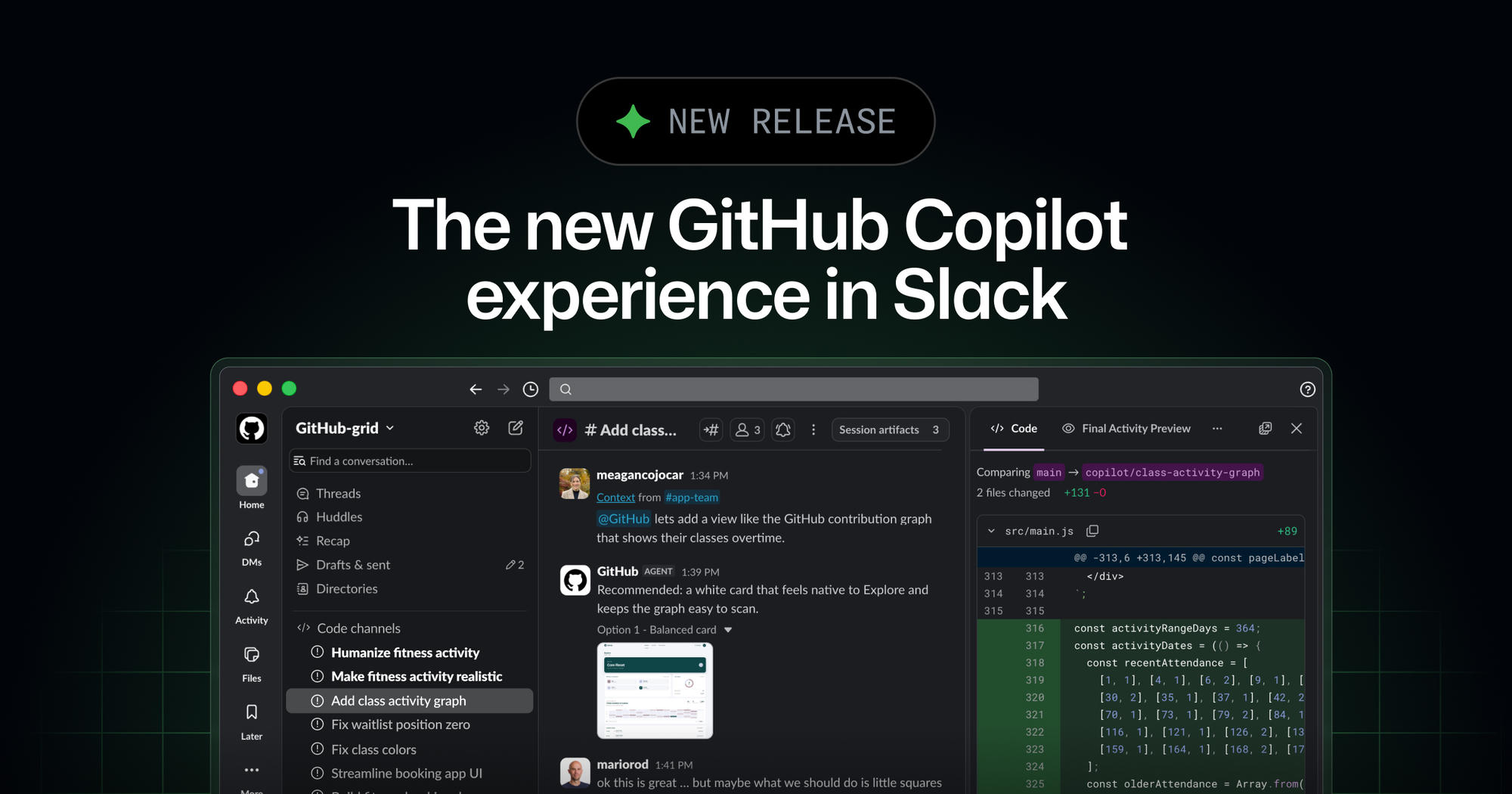
GitHub launched a new Copilot experience in Slack and shared agent sessions in Microsoft Teams on 21 August.
A team can mention @GitHub, give Copilot the conversation as context, investigate a failure, make changes inside a cloud sandbox and open a pull request. In Teams, anyone in the conversation can add context, while only participants with repository write access can trigger code changes.
“Bringing Copilot into the flow of conversation helps your team turn shared intent into shippable work.” (GitHub)
The chat thread is becoming a shared control surface. That is useful, but the pull request should remain the proof. Conversation can explain intent; the diff, tests and reviewer still decide whether the work ships.
5. Google ADK can test voice agents with real audio

Google added native live evaluation to its Agent Development Kit on 24 August. A simulated user generates actual audio, the agent responds across multiple turns, and the evaluation can score spoken replies and tool calls using rubrics.
“Shipping with confidence takes repeatable evidence that the agent holds up across the conversations real users will actually have.” (Google)
A voice demo can sound perfect once and still fail when someone interrupts, changes direction or gives a messy date. Put those awkward conversations into the eval set and run them in CI. Voice agents need regression tests for behaviour, not just unit tests for functions.
🧰 Worth your time
-
FetchSandbox MCP: Gives coding agents ready-made sandboxes for more than 70 APIs, including webhooks and failure states. The useful question from its Product Hunt discussion was whether the proof checks exact final values, not merely a successful response.
-
Clipto MCP: Lets agents search local video, audio, photos and documents by meaning. For creators with years of footage, finding the right clip may be more valuable than generating another one.
-
fx by Vercel Labs: An early, experimental coding-agent harness written in Zig. The interesting idea is to keep the binary, system prompt and tool surface small so more of the context belongs to the work.
Here is the practical question this week.
Add up what your team spends on hosted AI inference, then list the work you cannot send to a third party because of privacy, latency or cost. That tells you whether local AI is still a hobby—or whether it is becoming infrastructure.
Would you spend $5,499 on a Mac Studio to run your biggest models locally, or keep paying for cloud tokens?
Hit reply and tell me.
I read every single one.
Talk soon PAPAFAM,
Sonny 👋🏼
👇🏽 Don't forget to follow me across socials!




Responses