
Hey PAPAFAM 👋🏼
A stronger coding model is useful. A stronger coding model at the same standard token prices is worth putting back through your own tests.
GPT-6.1 Sol is this week's main story: OpenAI reports a step towards Astra-level performance without raising Sol's standard input or output prices. Alongside it, always-on agents, local inference and post-deployment checks are changing how we build. The common question is simple: does the work finish correctly, and what does it actually cost?
🔥 The Big One

GPT-6.1 Sol: stronger coding without higher standard token prices
OpenAI released GPT-6.1 Sol yesterday, just a week after GPT-6 Sol. The reason to pay attention is not another model name. OpenAI reports a substantial capability improvement while keeping standard input and output token prices unchanged from Sol.
Its standard API rates are $2 per million input tokens and $10 per million output tokens. Cached input is now $0.10 per million tokens, down from Sol's $0.20. If your agent repeatedly reuses eligible cached context, that is the specific price cut here, not a blanket reduction across every token.
The comparison baseline matters: GPT-6.1 Sol's standard input and output rates are a fifth of Astra's, not a fifth of last week's Sol rates. A lower token bill also does not guarantee a cheaper finished task if the agent needs more retries or human corrections.
“GPT‐6.1 Sol is not yet available in Chat.” (OpenAI)
⚡ What shipped this week
1. OpenAI dots give an always-on agent its own computer
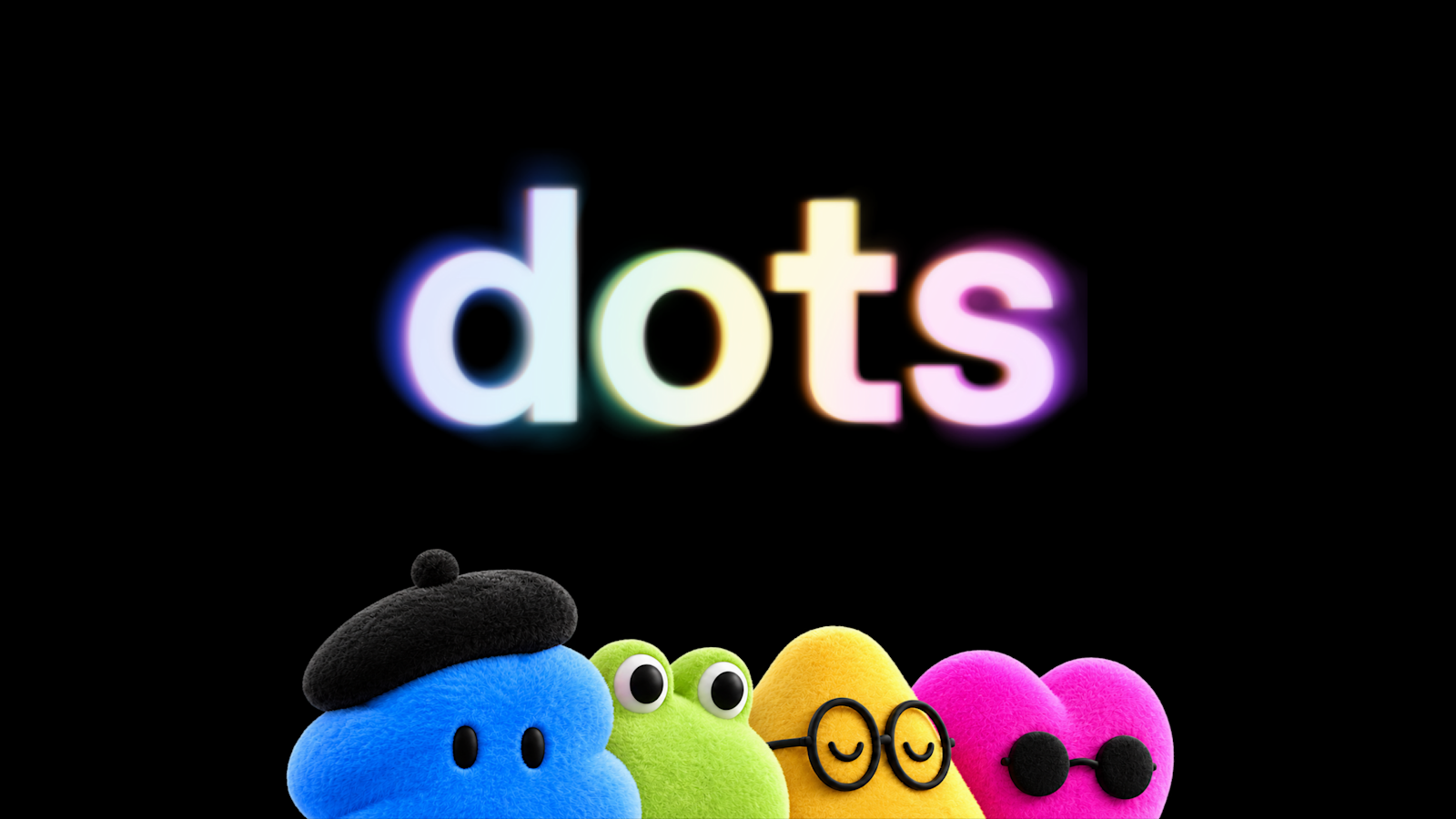
OpenAI's new GPT-6 Astra-powered dots have their own cloud computer and browser, with conversations across ChatGPT, Slack and Teams. You can inspect the dot's computer instead of relying only on a progress message.
“Conversations with your dot don’t count toward your ChatGPT usage limits.” (OpenAI)
That is not unlimited autonomous work. The first dot is included in Pro or Business Premium in eligible markets, but deeper work has an allowance. Enterprise access, including Edu and Healthcare, is an admin-enabled beta.
Proactive research uses read-only connected-app tools; it cannot send messages, change app content or control a computer. Active task execution is separate, with action-review rules and approvals. Start with a bounded job, such as investigating bug reports and preparing a handoff, rather than delegating the whole business.
2. Sonnet 5.5 targets fewer tokens, not cheaper tokens
Anthropic launched Sonnet 5.5 on 28 September at the same token prices as Sonnet 5. Its claimed savings come from needing less work to finish the job:
“In our testing, it costs up to 30% less per task than its predecessor.” (Anthropic)
Do not turn that into a 30% API price cut. There is also a migration detail: applications using thinking off must switch to between_tools before moving to Sonnet 5.5. Review response parsing too, rather than assuming a model-name swap leaves every integration unchanged.
3. Vinext 1.0 makes Next.js portability worth testing

Cloudflare's Vite-based implementation of Next.js has reached 1.0. It supports App and Pages routers, React Server Components and Server Actions, with deployment options beyond one hosting platform.
“Our test compatibility has risen to more than 99%, excluding cache components.” (Cloudflare)
That last clause matters. This is not a promise that every Next.js application migrates unchanged. Start with npx vinext check on a disposable branch, then test caching, authentication and actual runtime behaviour. Portability is valuable when your application works on the other side, not just when the build passes.
4. Google's Antigravity SDK can run agents offline

Google added local-model support on 23 September, including Gemma 4 26B A4B through LiteRT. Its example recommends more than 24GB of VRAM or unified memory.
“With this new support you can enable agentic assistance via local models completely offline.” (Google)
That means after downloading the model and dependencies. Local inference avoids cloud API charges, not hardware costs. Google's separate hybrid example still sends task descriptions and filenames to a cloud planner. Choose fully local or hybrid deliberately; they are different privacy boundaries.
5. Cursor checks what happened after the deploy
Cursor's new Rollouts bot turns a pull request into a monitoring plan, then checks logs, metrics and traces as the change deploys. It reports healthy, regression or inconclusive for each environment. Rollouts and the separate Security Review bot are available on Teams and Enterprise.
“Rollouts does not merge or roll back on its own today.” (Cursor)
That is a useful boundary. A passing test suite is not proof a production change delivered its intended effect. Read the proposed monitoring plan and fix missing instrumentation before expecting the bot to tell you what happened.
🧰 Worth your time
-
Floot MCP: A discovery from this week's launch notes: build and publish through connected AI tools using your existing AI subscription. Floot platform plans still apply; optional Floot-agent and image-generation credits are separate.
-
Latitude AgentScore: Another launch-note discovery. Inspect outcome, reliability, cost, speed and safety separately, not just the aggregate score. Its docs require at least 50 eligible production sessions before showing a score.
-
Unlimited Vercel Blob stores: Separate tenants or environments without a store-count cap. Unlimited stores do not mean free storage: creation counts as an advanced operation, and usage billing remains.
This week's challenge: choose one real coding task and compare GPT-6.1 Sol with your current model. Keep the tests fixed and track the full job: retries, tool usage, human fixes and the final result.
Which coding task would make you switch models if Sol handled it reliably? Hit reply and tell me what your current setup still gets wrong.
I read every single one.
Talk soon PAPAFAM,
Sonny 👋🏼
👇🏽 Don't forget to follow me across socials!


Responses