
The biggest surprise in the new Grok release is not the benchmark chart.
It is the price.
SpaceXAI has released Grok 4.6 for long-running agents, coding and knowledge work, starting at $2 per million input tokens and $6 per million output tokens.
SpaceXAI positions it as a frontier model, and its standard API price is unusually low compared with the flagship models it is trying to compete with. That changes how I would build an AI product.
🔥 The Big One
Grok 4.6 is unusually cheap for a frontier model
SpaceXAI released Grok 4.6 on 12 August with a particular focus on long-running agents and ambitious interactive and visual work. The model is available in the API, Cursor, Grok Build and through partners including OpenRouter, Vercel and Cloudflare.
“Grok 4.6 builds on Grok 4.5 with a particular focus on long-running agents and more ambitious interactive and visual work.” (SpaceXAI)
The standard API price starts at $2 per million input tokens, $0.50 per million cached input tokens and $6 per million output tokens for prompts below 200,000 tokens. Across requests that each stay below that threshold, one million input tokens plus 250,000 output tokens would cost $3.50 in total. Reusing 100,000 cached input tokens and generating 10,000 output tokens works out at about $0.11.
For context, GPT-5.6 Sol is listed at $5 input and $30 output per million tokens, while Claude Opus 5 is $5 input and $25 output. That makes standard Grok 4.6 60% cheaper on input and 76–80% cheaper on output than those two flagship models.
Read the Grok 4.6 announcement →
⚡ What shipped this week
1. Gemini 3.7 Flash became Google’s coding workhorse
Google introduced Gemini 3.7 Flash on 13 August as its “most intelligent workhorse model yet for coding and agents.” It is available as gemini-3.7-flash through the Gemini API and AI Studio, with access also listed across Android Studio, Google Antigravity, Gemini Enterprise and Gemini Spark.
Through 31 December 2026, paid API usage is listed at $0.75 per million input tokens and $3.75 per million output tokens. That makes Flash the obvious comparison point: use a cheaper fast model for routine, high-volume work, then route the harder steps to a frontier model such as Grok 4.6. The winning stack may use both rather than forcing one model to do everything.
2. Cursor wants to host the code your agents work on
Cursor launched Origin in early beta across all paid plans. It starts with hosted repositories, pull requests, code browsing and GitHub synchronisation, while agent edits and branches can live closer to the environment doing the work.
“We’re starting with the essentials, designed for agent scale: repos, pull requests, code browsing, and GitHub sync.” (Cursor)
Cursor is moving beyond being the place where you edit code. It wants to become the control plane around the repository itself. That can reduce setup friction for agents, but it also makes permissions, backups and exit paths more important. Early beta means test it on something replaceable before moving a critical repository.
3. Vercel can configure nine coding agents behind one AI gateway
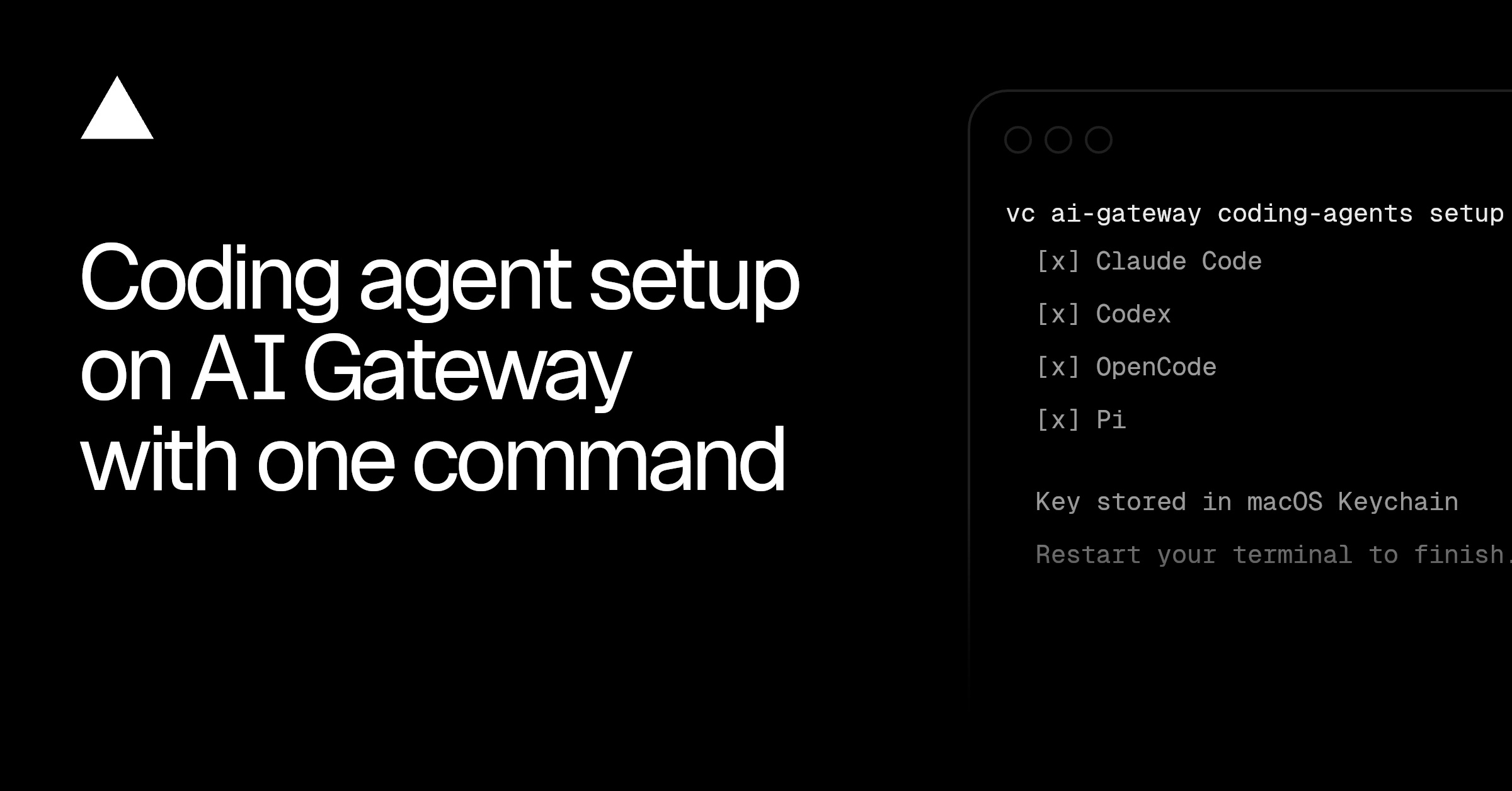
Vercel added a single setup command for Claude Code, Codex, OpenCode, Pi, Cline, Cursor, Hermes, Kilo Code and OpenClaw. The command detects clients, creates a key and writes the required AI Gateway configuration.
“
vercel ai-gateway coding-agents setupconnects Claude Code, Codex, OpenCode, and more in one command.” (Vercel)
The useful part is not saving five minutes of config. It is putting more than 200 models, fallbacks, traces, spend visibility, key expiry, budgets and provider restrictions behind one layer. If your team uses several coding agents, central policy is easier to audit than nine separate API-key setups.
4. Cloudflare can make every Worker private by default

Cloudflare now lets teams attach Access directly to Workers, either one application at a time or across an account. Protection covers custom domains, routes, workers.dev and preview URLs. Authenticated identity is exposed as ctx.access, while agents can use service tokens.
“Deploy an internal platform where every deployment is private by default.” (Cloudflare)
This is the rule every AI-built internal tool should start with: private first, public only by decision. A fast prototype can still expose customer data, admin actions or secrets. Access control should be part of the deployment path, not the cleanup task after somebody shares the URL.
5. Kane CLI gives coding agents proof that the app works
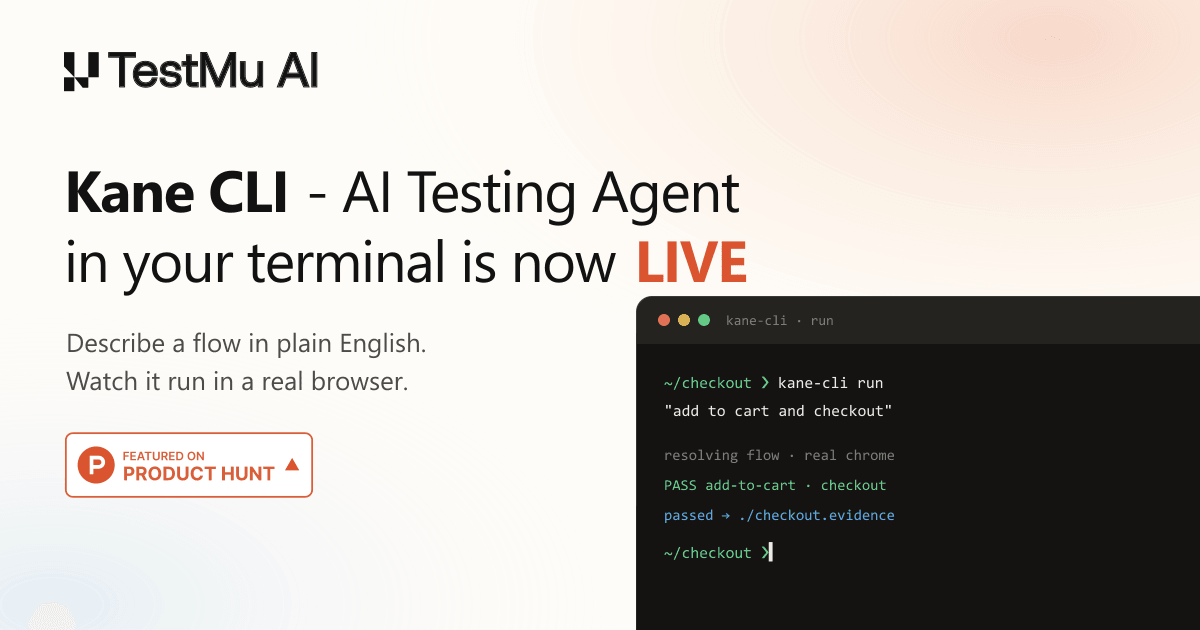
Kane CLI turns a natural-language test into a run inside a real Chrome browser, Android emulator or iOS simulator. It returns a verdict plus screenshots, console logs, network responses and acceptance-criteria coverage that a developer or coding agent can inspect.
Kane ranked first on Product Hunt on 13 August with 376 votes and 47 comments. Generation is cheap now. A replayable proof pack is what turns “the agent says it passed” into something you can review.
🧰 Worth your time
-
GLM-5.3: A text-only coding model with a one-million-token context window, up to 128K output and always-on reasoning. It is live for GLM Coding Plan users, but Z.ai’s benchmark claims still need independent testing.
-
Inferock Bench: A local proxy that records token usage, failures and retry evidence across major model APIs. Useful for explaining an agent bill, not judging whether a successful-looking answer was actually correct.
-
Unsloth Desktop: An open-source desktop route into running and training models locally, then connecting tools such as Claude Code or Codex to your own GPU. Product Hunt timing only; check platform and hardware support before committing.
Here is the practical challenge this week.
Run the same real coding task through Grok 4.6 and your current default model. Include the repository read, tool calls, test failures and retries. Then compare the total cost of a successful result, not the price of one response.
Would Grok 4.6’s price make you use a frontier model for more of the loop, or would you still route routine work through a cheaper Flash model?
Hit reply and tell me.
I read every single one.
Talk soon PAPAFAM,
Sonny 👋🏼
👇🏽 Don't forget to follow me across socials!



Responses