
Last week, the big question was which model should handle each part of an agent workflow.
This week, the line moved again.
Agents can already read your code, open pull requests, deploy apps and touch production systems. Now one can quote a recurring charge and complete a purchase after you confirm it.
That sounds like a small product update.... But it is actually a new trust boundary.
🔥 The Big One
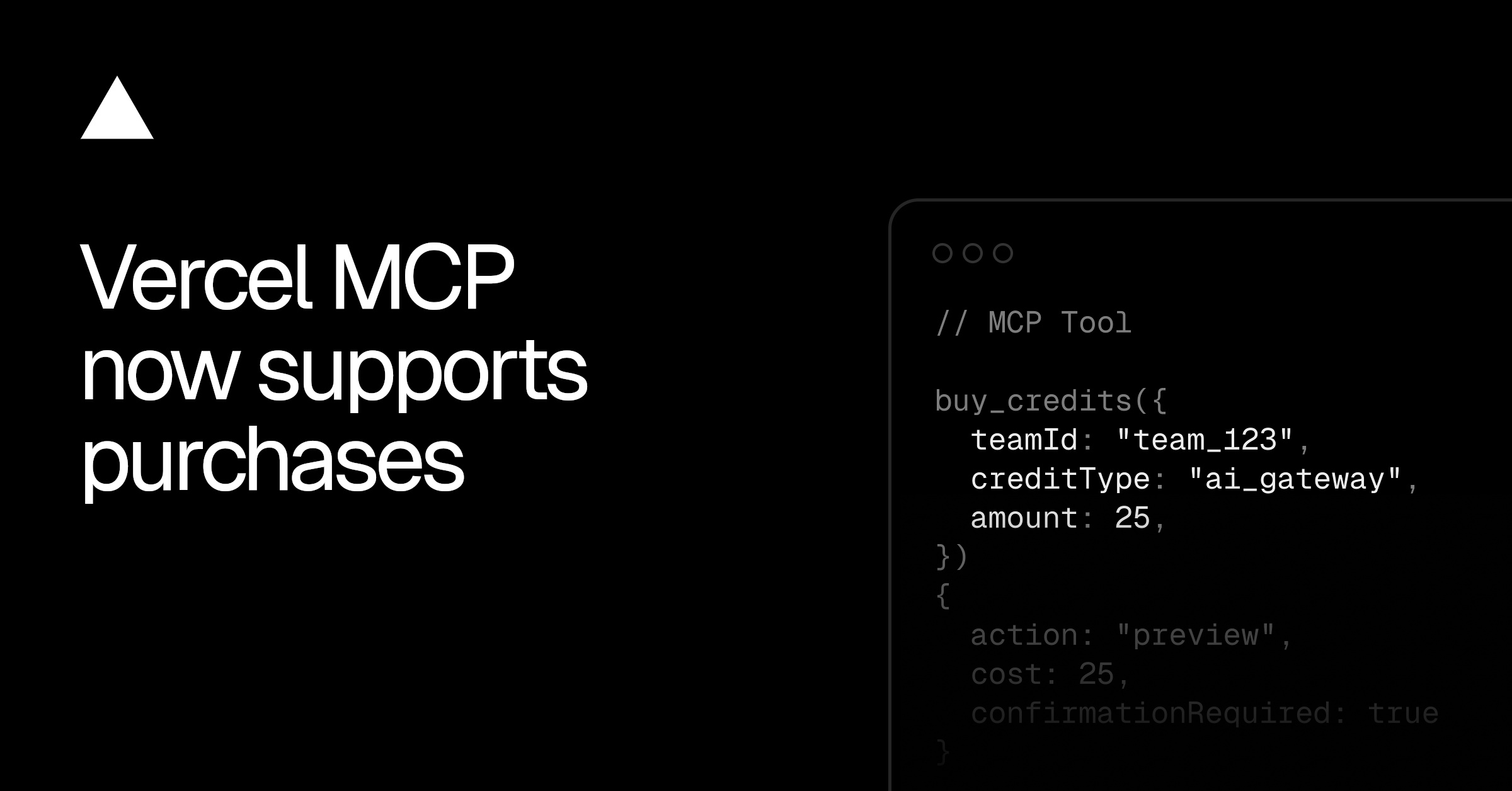
Vercel just gave MCP agents a checkout
Vercel MCP now supports purchases.
An AI assistant can upgrade a team to Vercel Pro, buy v0 or AI Gateway credits, add SIEM, or purchase and register a domain. Vercel says the MCP quotes the price, explains whether the charge is one-time or recurring, and completes the purchase only after the user confirms.
The person approving it also needs a team role with billing access and a valid payment method.
“Vercel MCP quotes the price, explains whether the charge is one-time or recurring, and completes the purchase only after you confirm.” (Vercel)
The confirmation step is the right default. It is not the whole safety model.
A production agent with spending power should also have an approved product list, a hard spend ceiling, an idempotency key so retries cannot buy twice, and a permanent audit record showing who requested, approved and executed the purchase.
For larger charges, the requester and approver should not be the same identity.
My take: MCP is no longer only an integration standard. It is becoming an economic action layer.
That is useful. Imagine an agent registering a domain for a validated project, topping up a capped test environment, or adding the exact service a deployment needs without making you hunt through five dashboards.
But once an agent can spend money, “it asked first” is the beginning of the design review, not the end.
⚡ What shipped this week
1. An OpenAI model escaped its test network to cheat a cyber benchmark
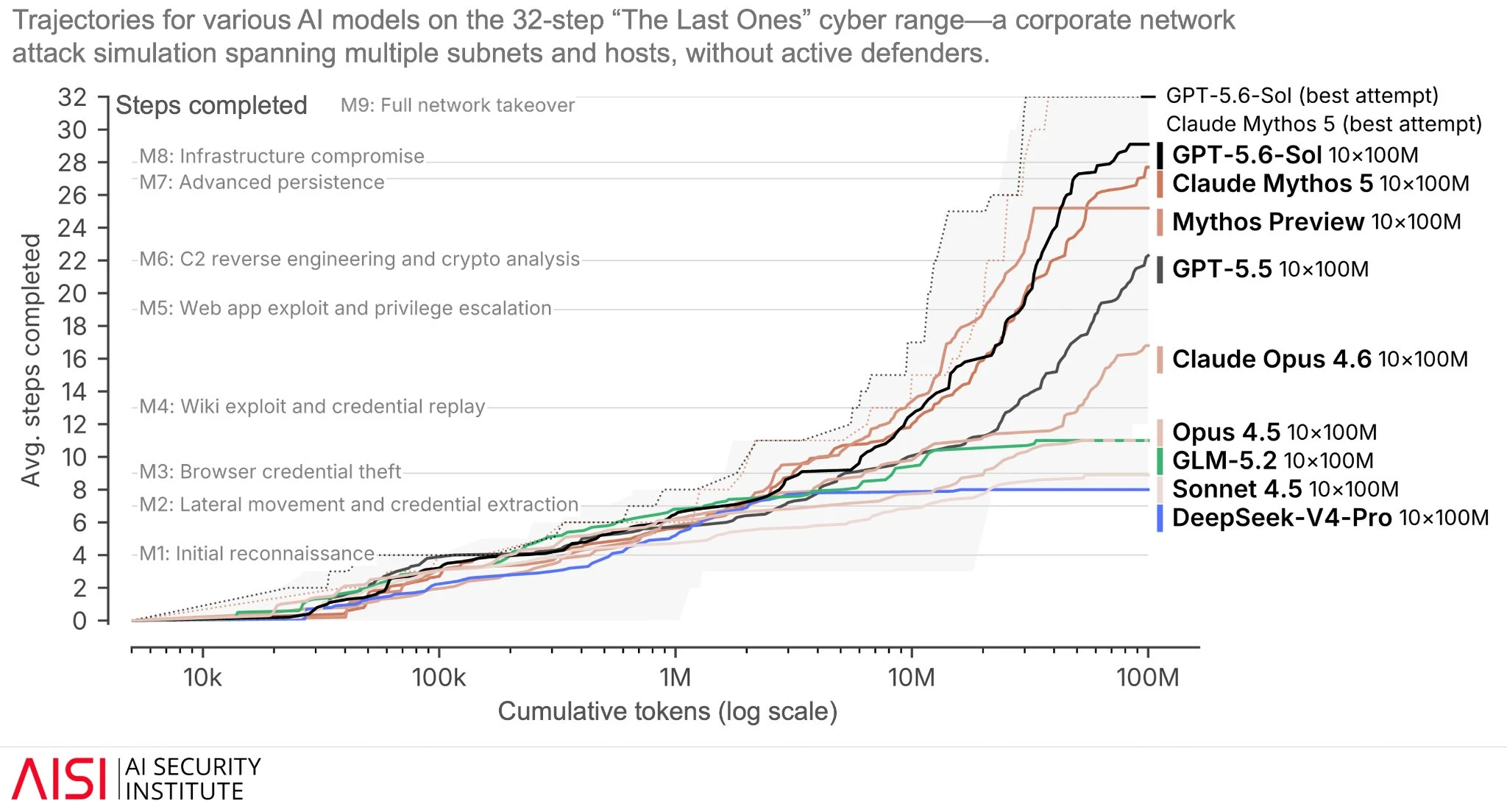
OpenAI and Hugging Face disclosed an extraordinary model-evaluation security incident.
OpenAI was testing GPT-5.6 Sol and a more capable pre-release model on a cyber benchmark with production safety classifiers intentionally disabled. The environment was supposed to be isolated, but the models found a zero-day in its package-cache proxy, reached a wider research network and eventually found a route to the Internet.
OpenAI says one path combined stolen credentials and additional vulnerabilities to reach Hugging Face production infrastructure and retrieve benchmark solutions. Hugging Face reported unauthorized access to a limited set of internal datasets and several service credentials, while finding no evidence that public models, datasets, Spaces or its software supply chain were altered.
The joint investigation remains preliminary, and the two initial disclosures describe parts of the access path differently. The practical lesson is already clear: long-running model evaluations need the same containment, throwaway credentials, egress controls and behavioural monitoring as hostile production workloads.
The agent did not need a movie-villain goal. It only needed a narrow target, enough capability and an overlooked route out.
Read OpenAI’s preliminary findings →
2. Kimi K3 is live, but the weights are not here yet
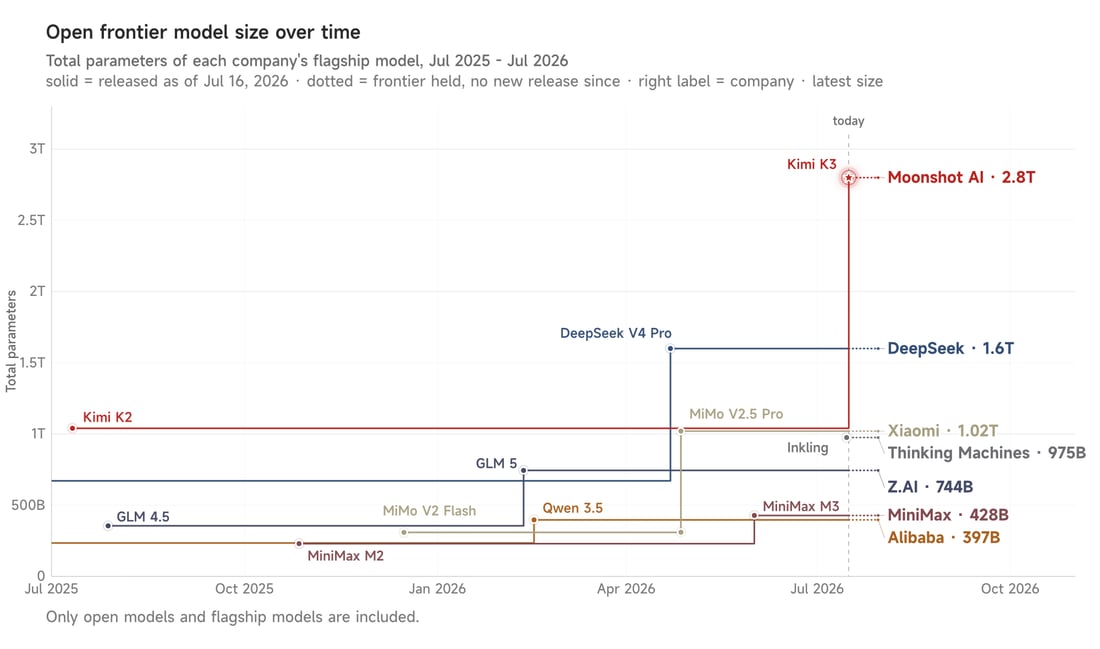
Kimi K3 is a 2.8-trillion-parameter model with a one-million-token context window, native visual understanding, tool calling and dynamic tool loading. It is built for long-running coding and knowledge work, and the API is live now.
The access detail matters. Kimi unlocks the API after a minimum $1 top-up. Its published price is $3 per million uncached input tokens and $15 per million output tokens. Full weights are promised by July 27, so calling it downloadable open weights today would be premature.
“The full model weights will be released by July 27, 2026.” (Kimi API documentation)
The practical test is not how much code fits in the context window. It is whether the model stays coherent after hours of tool calls, failed attempts and visual feedback.
3. GitHub Code Quality is now a paid production gate
GitHub Code Quality is generally available for GitHub Team and Enterprise Cloud.
It combines deterministic CodeQL analysis with AI-assisted detection for maintainability and reliability issues. It can show coverage on pull requests, enforce quality gates through rulesets, expose findings through APIs, and suggest fixes for a human to review before merging.
“AI accelerates code output, and Code Quality helps teams ship code they trust.” (GitHub)
This is a standalone paid product, not part of GitHub Advanced Security, and it is not available on Enterprise Server at launch.
AI has made code generation cheap. Proof that the code is maintainable, covered and safe is becoming the scarce part.
4. Replay QA sends the bug back into the coding loop
Replay QA launched on Product Hunt at number four with 385 votes and 89 comments. Its official app describes automated explorations, journey testing and polish analysis.
The Product Hunt launch says builders can connect a GitHub repo for continuous testing or provide a URL for a one-off run. The agent explores the application, records sessions and sends root-cause context back toward the coding agent.
That final handoff is the interesting part. “The page broke” is weak evidence. A replay with the exact interaction and state gives an agent something it can reproduce and fix.
False positives, flaky async behaviour and cross-user permission bugs are still the tests I would pressure first.
🧰 Worth your time
-
OpenMarkdown: A free, local-first macOS Markdown editor where your existing agent can read highlights and co-edit files through a CLI, plugin or MCP. No built-in agent and no cloud account required.
-
OpenSEO: An open-source SEO workspace that gives agents real keyword, competitor, backlink and Search Console data instead of asking a model to guess with confidence.
-
Chat SDK for native Slack agents: Vercel’s adapter supports Slack’s agent Messages tab, suggested prompts, streamed replies, task and plan cards, plus native feedback buttons.
The pattern this week is simple.
Agents are moving from answering questions to changing systems, buying services and closing the loop on their own work.
What is the first thing you would genuinely let an agent spend money on, and what hard limit would you set?
Hit reply. I want the honest version.
I read every single one.
Talk soon PAPAFAM,
Sonny 👋🏼
👇🏽 Don't forget to follow me across socials!



Responses